

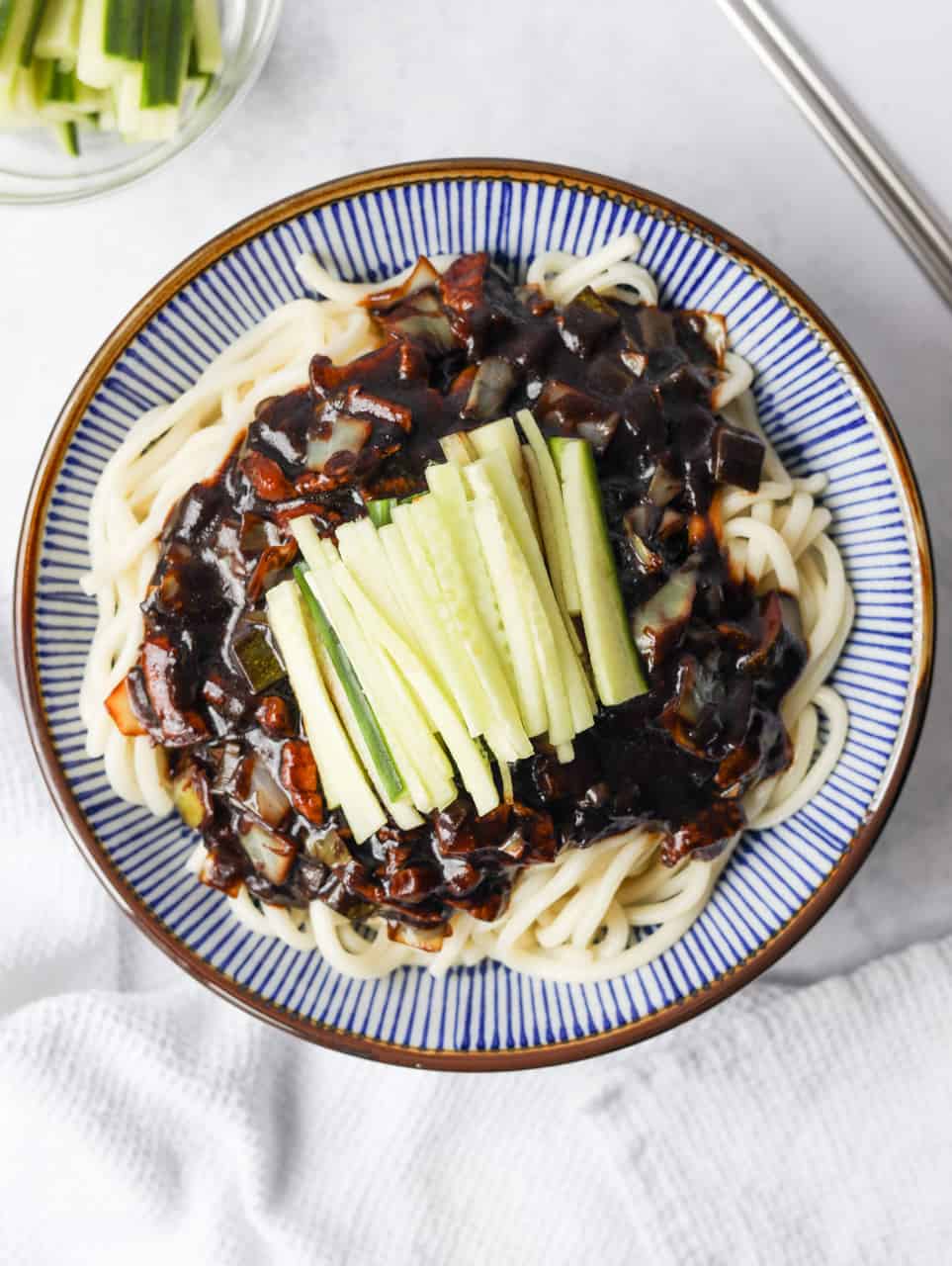
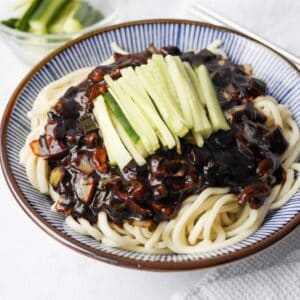
Thick, chewy noodles are coated in a rich black bean sauce with tender pork belly, cabbage, zucchini, and aromatics. This easy jajangmyeon recipe is ready in just 30 minutes. The thick, glossy sauce clings to every noodle for a savory and satisfying meal.
Jump to:
Jajangmyeon (짜장면), aka jjajangmyeon or Korean black bean noodles, is a popular Korean-Chinese noodle dish made with thick wheat noodles topped with a savory black bean sauce, pork, and vegetables and often served with pickled daikon radish.
It remains my absolute favorite meal to eat while watching a good Korean drama. Whenever I see the sauce being mixed into the noodles, my mouth begins to water! It's also commonly enjoyed with tangsuyuk for special occasions, like graduations or birthdays.
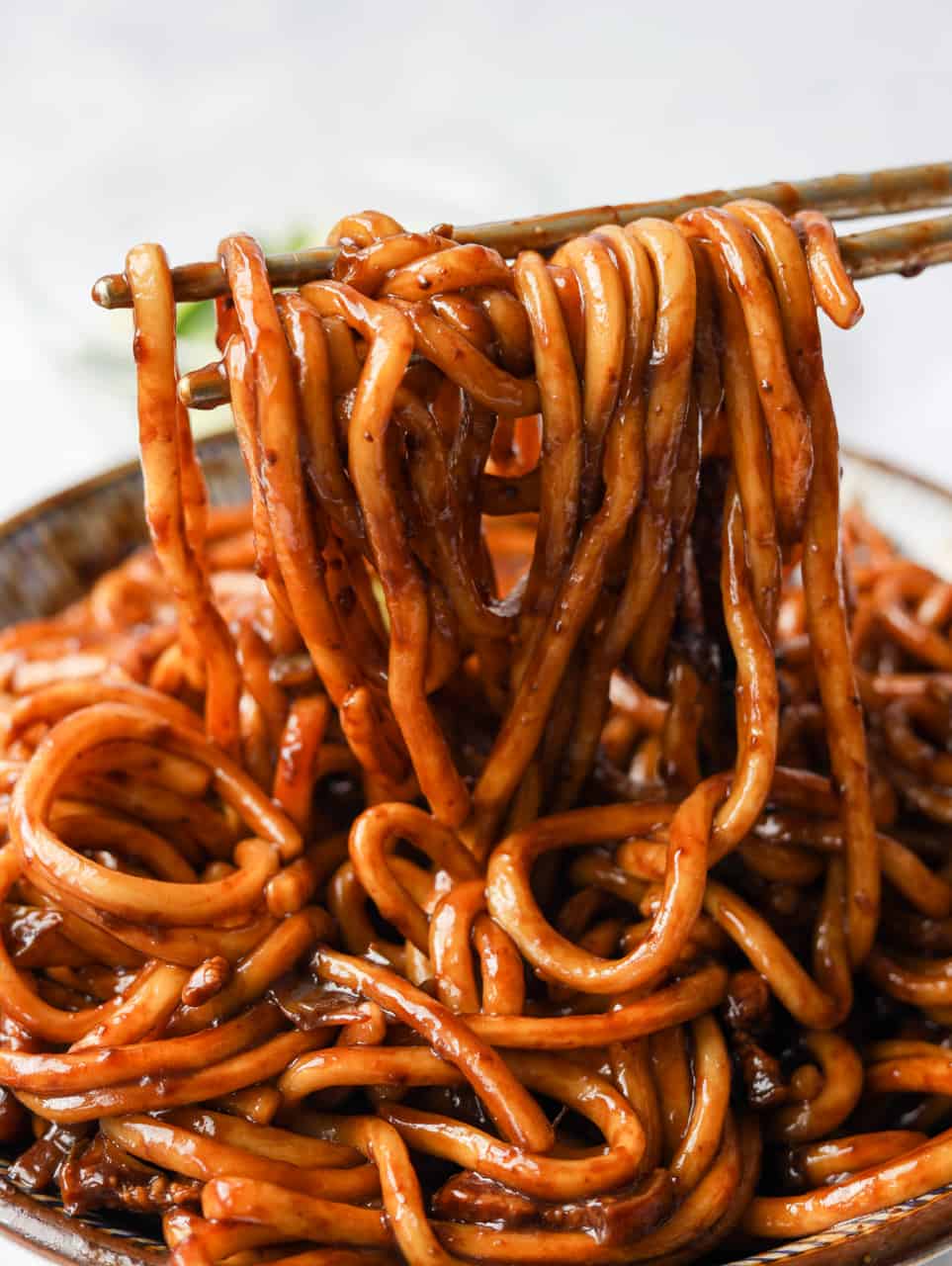
After making this dish many times, I've found that frying the chunjang in oil first mellows its natural bitterness and gives the sauce a richer flavor.
Ingredients & Substitutes
Exact ingredient amounts are listed in the recipe card at the bottom of this page.
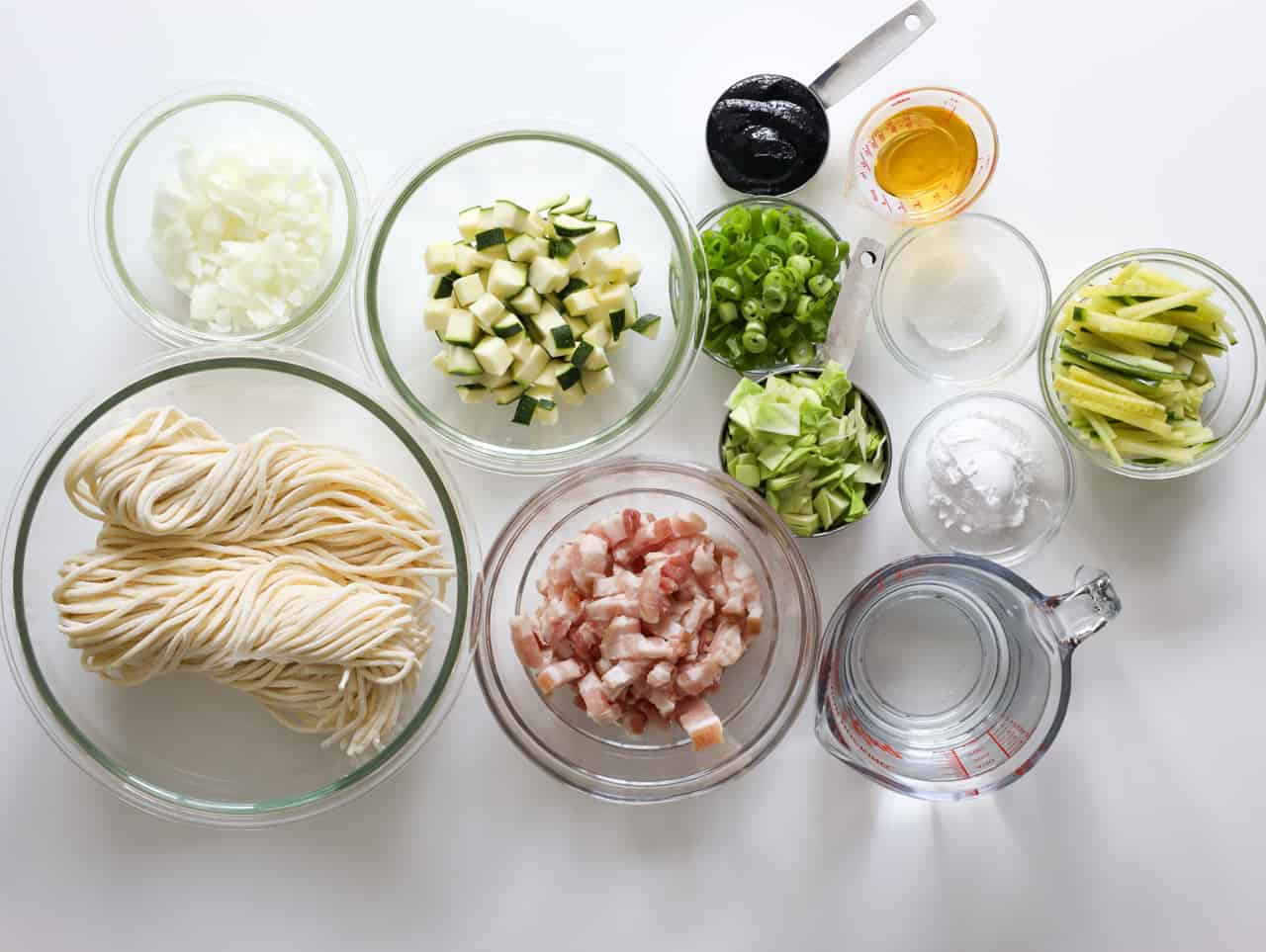
- Fresh Korean Wheat Noodles: Use thick, white noodles found in the refrigerated section of Korean markets. These are not pre-cooked and are dusted in white starch. Udon noodles also work.
- Pork Belly: Cut into ½-inch uniform cubes so they cook evenly and render their fat. Diced pork shoulder also works.
- Korean Black Bean Paste (Chunjang): Look for this fermented black bean paste sold in brown rectangular tubs at Korean grocery stores, like H Mart.
- Vegetable Oil: Use a neutral, high-smoke-point oil. Canola or refined avocado oil also works.
- Onion: Cut into uniform pieces for even cooking. Two small shallots also work.
- Green Cabbage: Chop into 1-inch squares. Avoid napa cabbage because it releases more water and can thin the sauce.
- Zucchini: Dice into ½-inch cubes. Yellow squash also works.
- Green Onion: Finely slice both the white and green parts.
- Oyster Sauce: Vegetarian stir-fry sauce also works.
- Cold Water
- Cornstarch: Thickens the sauce. Potato starch or tapioca starch also works.
- White Granulated Sugar: Cane sugar also works.
- Cucumber: Cut into thin matchsticks for serving.
Note: Asian ingredients are typically available at most Korean or Asian grocery stores or online.
Expert Tips
- Dry the vegetables well after washing to prevent excess water from thinning the sauce.
- Re-whisk the cornstarch slurry right before adding it because the starch settles quickly.
- Don't overcook the vegetables or they'll release excess liquid and thin the sauce.
- Thin an overly thick sauce with a small splash of hot water as needed.
- Cook the noodles last so they stay chewy and don't clump before serving.
Instructions
Below are step-by-step instructions on how to make jajangmyeon:

- Prepare the slurry: Whisk the sugar, cornstarch, and cold water together in a small bowl until smooth. Set aside.
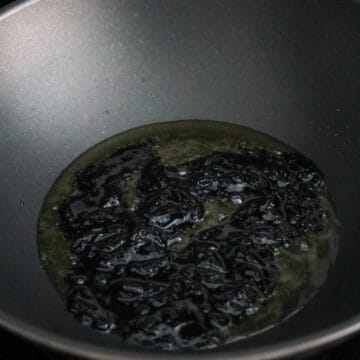
- Fry the black bean paste: Heat the vegetable oil in a large pan over medium heat. Fry the black bean paste for 3 minutes, stirring constantly. Pour the black bean paste and oil through a fine-mesh strainer set over a bowl. Return 1 tablespoon of the strained oil to the pan and set the black bean paste aside.
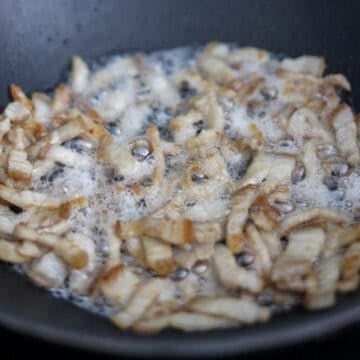
- Cook the pork: Add the pork belly to the reserved oil and cook over medium heat until browned and some of the fat has rendered.
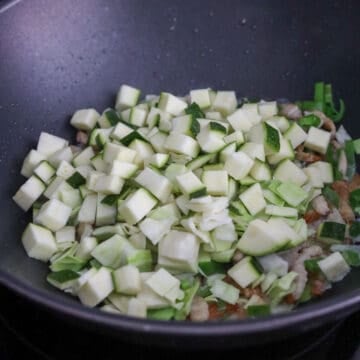
- Cook the vegetables: Add the onion and green onions and cook until the onion is translucent. Add the zucchini and green cabbage and sauté until crisp-tender, about 2-3 minutes.
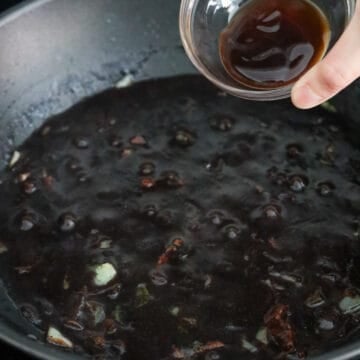
- Make the sauce: Return the fried black bean paste to the pan and mix well. Re-whisk the cornstarch slurry, then pour it into the pan. Simmer over low heat, stirring, until the sauce is thick and glossy. Stir in the oyster sauce.
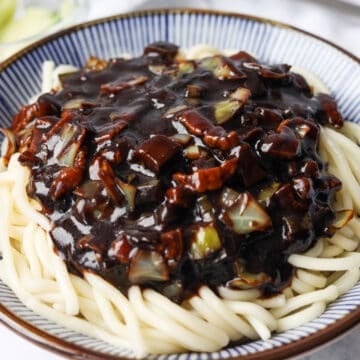
- Cook the noodles and serve: Bring a separate pot of water to a boil. Cook the fresh wheat noodles until al dente, about 3-4 minutes. Drain thoroughly without rinsing and divide between serving bowls. Ladle the hot black bean sauce over the noodles and garnish with cucumber. Mix the sauce and noodles well before eating.
Storage & Reheating
- Refrigerator: Store the black bean sauce and noodles separately in airtight containers for up to 4 days.
- Freezer: I don't recommend freezing jajangmyeon because the noodles will become soggy and the vegetables will become soft and watery.
- Reheating: Reheat the sauce in a pan over medium heat for about 5 minutes with a splash of water, or microwave for 1-2 minutes until hot. For the best texture, serve with freshly boiled noodles.
Variation
- Spicy: Add 1 teaspoon of gochugaru to the sauce for some heat.
Pairing Suggestions
Serve Korean jajangmyeon with:
- Danmuji: Crisp, tangy pickled radish cuts through the rich black bean sauce.
- Tangsuyuk: Crispy Korean sweet and sour pork adds a crunchy, sweet and tangy contrast.
- Fried Mandu: Crispy Korean dumplings make an easy starter alongside the saucy noodles.
FAQ
Chunjang is naturally bitter, so make sure to fry it in oil for the full 3 minutes over medium heat, stirring constantly. Avoid burning the paste, which can make it even more bitter.
Make sure to dry the vegetables well after washing and don't overcook them, as excess moisture can thin the sauce. Re-whisk the cornstarch slurry before adding it and simmer the sauce until thick and glossy.
More Like This
📖 Recipe
Easy Jajangmyeon (30 Minutes)

Ingredients
- 1.20 lbs thick Korean wheat noodles fresh, uncooked kind
- 0.65 lbs pork belly diced into ½-inch pieces
- 1 small onion finely diced
- 1 cup green cabbage cut into 1-inch squares
- 1 cup zucchini diced into ½-inch pieces
- 2 green onion finely chopped
- ⅓ cup Korean roasted black bean paste (aka Chunjang)
- 3 tablespoon vegetable oil any neutral oil
- 1 tablespoon oyster sauce
- ¾ cup cucumber julienned, optional garnish
Cornstarch Slurry:
- 2 cups water cold
- 2 tablespoon cornstarch
- 2 tablespoon white granulated sugar
Instructions
- Prepare the slurry by whisking the sugar, cornstarch, and cold water together in a small bowl until smooth. Set aside.
- Heat the vegetable oil in a large pan over medium heat. Fry the black bean paste for 3 minutes, stirring constantly. Pour the black bean paste and oil through a fine-mesh strainer set over a bowl. Return 1 tablespoon of the strained oil to the pan and set the black bean paste aside.
- Add the pork belly to the reserved oil and cook over medium heat until browned and some of the fat has rendered.
- Add the onion and green onions and cook until the onion is translucent. Add the zucchini and green cabbage and sauté until crisp-tender, about 2-3 minutes.
- Return the fried black bean paste to the pan and mix well. Re-whisk the cornstarch slurry, then pour it into the pan. Simmer over low heat, stirring, until the sauce is thick and glossy. Stir in the oyster sauce.
- Bring a separate pot of water to a boil. Cook the fresh wheat noodles until al dente, about 3-4 minutes. Drain thoroughly without rinsing and divide between serving bowls. Ladle the hot black bean sauce over the noodles and garnish with cucumber. Mix the sauce and noodles well before eating.


Xp
Just a question, can you freeze the sauce without the vegetables?
Christie Lai
Yes, that would work! A fine sieve will help strain out the vegetables so you're left with the sauce to freeze.
AliceK
This recipe looks wonderful! I do have a question about the pork belly. It isn't easy to find in my area. I know that it is the same cut that is used for making bacon. Could I substitute bacon, or just use a fatty piece of boneless pork?
christieathome
Thanks so much Alice! Yes, feel free to substitute with pork loin, pork shoulder or ground pork/beef.
Kathryn
Do you need to add cornstarch?
christieathome
Sorry for the delayed reply! Yes, it's needed to help thicken the sauce.
Kerrie
Thank you so much! You are a life-saver! Every single recipe for this says boil noodles per instructions on the package. My package doesn't have any english except for an ingredient sticker. Without your recipe I was going to have to check the noodles every minute until they were done. Thanks again!!
christieathome
Thank you so much for making my recipe Kerrie! Glad I could help with these instructions 🙂
Never Ending Journeys
What a delicious noodle dish! I like the idea of putting the black beans on top, too!
Heidi | The Frugal Girls
I really liked your idea to use chicken as the protein. That really allows the yummy flavors of your sauce to come through! 😋
Safia
Loved all the historical facts behind this recipe and your own feelings. The metric measurements helped massively as well as the tips. Thumbs up from me!!!
Christie Lai
Thanks so much for your kind words, Safia! So glad I could share the background and my personal experience with this dish 🙂 Also glad the metric conversion tool has been helpful.
Vivian Wan
Finally my determination to get all the ingredients did not fail me. Made this and it was a hit! I used pork belly instead of chicken and it was so delicious. Definitely satisfied my jajangmyeon craving
christieathome
Thanks so much for your kind review Vivian! I'm so glad you enjoyed this recipe and having it with pork belly is such a delicious decision! 🙂 Thanks again!
Josiah - DIY Thrill
These noodles look so delicious!
Molly
These noodles were SOOOO BOMB!!! I tried it and it was so easy to make too.